
When you first bring a cat bed into your home, you might be full of anticipation—”It’ll love it!” However, reality often turns out to be that the cat gives you a glare, then chooses to take a nap behind the sofa or in a cardboard box. Honestly, I’ve experienced this too—at that moment, you start to wonder if you picked the wrong cat beds.
Actually, it’s not that cats are “picky,” but rather that cat beds don’t truly meet their instinctive needs. Cats choose beds based on a completely different logic than our aesthetic preferences; they prioritize three core factors: softness, privacy, and location.
Today, we’ll take a cat’s perspective to help you prioritize these three factors and provide practical advice so your cat not only enjoys using cat beds but also considers them its “own kingdom” long-term.
Table of Contents
1. Softness: The first criterion for cats using cat beds.
For cats, the softness of the bed directly affects whether they want to get in. Even the most beautiful bed will likely be ignored if it’s uncomfortable. Cats can sleep 15-20 hours a day and have extremely high requirements for their sleeping environment.
Why is softness important?
- Supporting Body Curves: Cats have flexible spines and love to curl up into a ball. A soft, slightly supportive mattress can conform to the lines of a cat’s body, allowing them to completely relax.
- Warmth: Soft materials can retain body heat and enhance a sense of security. Especially in winter, cats are more likely to choose carpets or windowsills because of the cold, neglecting the bed itself.
- Sensitive to touch: Cats are very picky about the texture of surfaces; they are likely to reject rough or plastic-like surfaces.
Practical tip:
Placing a familiar blanket on the cat beds can enhance the softness and scent, making the cat more willing to try it.
In summary, softness is the first hurdle for cats to accept cat beds; if they are uncomfortable, they will not use them no matter how good other conditions are.
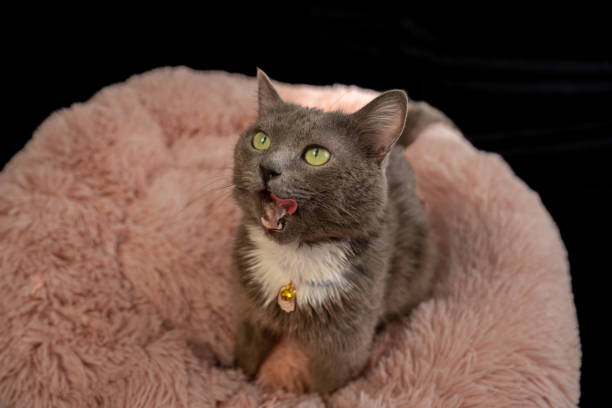
2. Secrecy: A source of security for cats
Flexibility determines whether a cat is willing to go inside, while privacy determines whether a cat feels safe and secure inside.
Cats in the wild habitually sleep in caves, bushes, or rock crevices for a simple reason—a sense of security. Enclosed or semi-enclosed cat beds simulate this environment, allowing cats to remain aware of their surroundings without being startled while in a semi-sleep state.
Concealed manifestations
- Semi-enclosed or cave-like design: Provides a psychological barrier for cats and reduces anxiety.
- Position slightly below eye level: Although cats like to observe their surroundings, a slightly lower bed can provide a sense of security by being shielded.
- Scent retention: Enclosed spaces can retain a cat’s own scent, making it feel like it’s in its own territory.
A friendly reminder: Overly enclosed spaces can make cats feel isolated, so semi-enclosed designs are usually the most popular.
Conclusion: Concealment is the key factor after softness, affecting the duration and depth of a cat’s rest.
3. Location: Strategic considerations for cats when choosing cat beds
The last dimension—location—seems simple, but it determines whether a cat will actively use cat beds. Cats choose their resting place based on light, temperature, field of vision, and movement patterns.
The bed that cats like
- A sunny windowside: using the sun to regulate body temperature.
- A high vantage point, or a vantage point overlooking the surroundings, allows for observation of the environment and a sense of security.
- Quiet, low-traffic areas: away from kitchens, hallways, and frequent disturbances, improving sleep quality.
Interestingly, some cat beds may be soft and secluded, but if placed in noisy areas, cats will still “abandon” them, which shows that the appropriateness of the location directly affects the frequency of use.
Practical suggestions:
- Observe the cat’s preferred sleeping position.
- Place the cat beds in a location where the cat frequents, where the lighting is moderate, and where there is no disturbance.
- Try different combinations of positions to find the spot your cat likes best.
Summary of three-dimensional priorities
Based on cat behavior, the priority for choosing cat beds is as follows:
- Comfort—People are only willing to try things when they feel comfortable.
- Concealment—people stay because they feel safe.
- Placement—It will be used more often if it is placed in the right place.
These three elements complement each other and are indispensable. A soft and secluded bed, if placed in the wrong location, may become nothing more than decoration; even if the location is good, if it is not comfortable, it will be ignored by the cat.
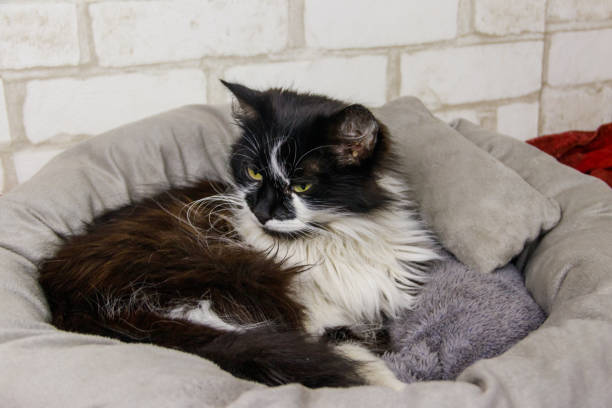
Practical methods: How to get your cat to use cat beds willingly
- First observe: Does the cat prefer to sleep in a high place, a low place, near a window, or in a corner?
- For softness: commonly use a blanket or small mat on the bed.
- Provide a semi-enclosed environment: make the cat feel safe while still allowing it to see.
- Try different positions: Don’t stick to one position from the beginning; try it several times.
These methods can not only increase the likelihood of your cat using cat beds but also help you understand its personality preferences.
FAQ
Q1: My cat won’t go inside; is it a problem with the bed?
A: Not necessarily. Cats value location and a sense of security. We suggest observing your cat’s preferred resting spot and then adjusting the bed accordingly.
Q2: My cat prefers cardboard boxes or blankets; does that mean the cat beds are bad?
A: Not entirely. Cardboard boxes or blankets provide softness and enclosure, but their location is more in line with a cat’s preference.
Q3: Do cats prefer high or low places?
A: It depends on the cat’s personality. Most cats like to observe their environment from high places, but some cats prefer to sleep low or in corners, depending on their need for security.
Q4: Which is more important, softness or concealment?
A: Softness is the priority, because if it’s uncomfortable, the cat simply won’t go in. Concealment is secondary, and location is the last factor determining the frequency of long-term use.
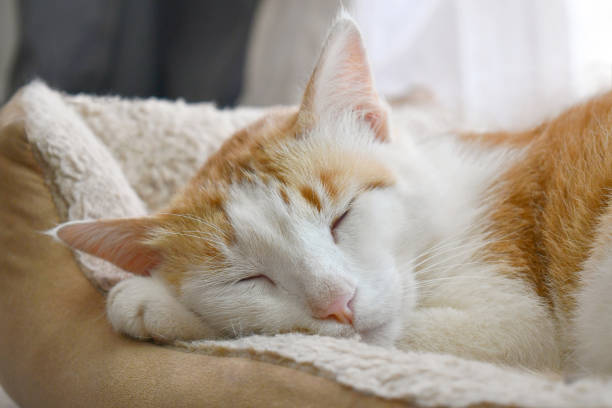
Summarize
Choosing cat beds from a cat’s perspective involves a very clear core logic:
- Softness: The first requirement for comfort
- Concealment: A sense of security allows cats to stay.
- Location: It will only be frequently used if placed in the right location.
Understanding a cat’s true behavioral logic and psychological needs will prevent you from blindly choosing cat beds, allowing your cat to use them willingly and happily. It’s not just a bed but a private kingdom for your cat, a place where it can feel safe, relax, and enjoy every moment.
