
When you walk your beloved cat into a grooming salon, you might be thinking about a haircut, bath, and nail cleaning… But what about your cat? It might be blinking its big eyes, wondering, “Where am I going?” At that moment, its little heart might be beating a little fast. To help them transition from “waiting” to relaxation, a carefully chosen cat bed in the grooming salon’s waiting area is especially important. This article will guide you through understanding why the waiting area needs dedicated cat beds, how to scientifically arrange them, and practical design tips to make your grooming salon’s waiting area both comfortable and effective in alleviating your cat’s anxiety.
Why do beauty salons need dedicated cat beds in their waiting areas?
Relieving cats’ anxiety before bathing/grooming
Cats are particularly sensitive to changes in their environment. Unfamiliar sounds—the hum of a hairdryer, the dripping of running water, the footsteps of strangers—can all trigger their defensive reactions. Experience in the pet grooming industry shows that a well-designed waiting area can help cats calm down.
Establishing a dedicated cat bed area is like giving cats a recognizable little “haven.” They can smoothly transition from “leaving the store” to “waiting” to “grooming service,” rather than being directly thrust into an unfamiliar environment.
Enhance brand and service experience
Customers bring their cats to grooming salons not just to make them look prettier, but also to ensure a smooth and reassuring experience. If you can provide comfortable cat beds in the waiting area, along with soft lighting, a low-noise environment, and comfort mats or toys, customers will immediately perceive your professionalism and attentiveness. This not only increases satisfaction but also allows for natural word-of-mouth marketing.
In other words, a thoughtfully designed waiting area is not just about pet welfare but also an integral part of the salon’s brand.
Optimize process and behavioral safety
If the waiting area is just a few chairs haphazardly placed, cats might run around, jump on the counter, or even cause safety issues. Dedicated cat beds provide a fixed, safe space where cats can lie down comfortably, curl up, and observe their surroundings without running around due to stress. This allows groomers to better control the process and reduces the probability of accidents.
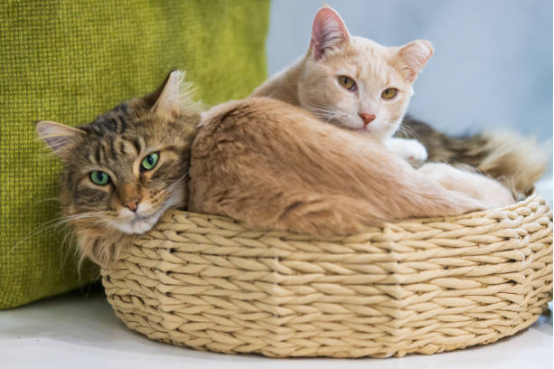
Key design elements of cat beds in beauty salon waiting areas
When designing or renovating a waiting area for a beauty salon, the following points are worth noting:
1. Comfortable and safe bed design
- Moderate size and soft edges: Cats like the feeling of “nesting” in a bed, so a bed that is too big or too hard is not good.
- Non-slip and easy to clean: Beauty salons are prone to water stains and hair, so the bottom material needs to be safe and easy to clean.
- A slightly thicker mattress: provides cushioning so the cat won’t feel uneasy from a cold or hard floor.
- Small fences or low barriers: Separate the cat and give it its own little world so it can feel at ease even if it is nervous.
2. Environmental control: sound, odor, and visual.
- Avoid areas with drafts and bathing, as cats are very sensitive to sound.
- Use soft lighting and gentle colors to avoid strong light and shadow that could cause discomfort.
- Pay attention to the smell: Freshly washed cats, perfumes, or sprays may make cats uncomfortable. Choose low-scented or specially formulated safe products.
- Keep your field of vision simple and avoid too many people or stimulation. Cats need to be observed, but they don’t want to be frightened.
3. Soothing elements and interactive design
- Provide your cat with a few toys, blankets, or your old shirts to give it a sense of belonging.
- Small display boards or photo walls can showcase the daily life of the beauty salon, reassuring customers while also providing visual information.
- Soft music or white noise (at a very low volume) can help cats relax.
- If space permits, a “cat rest monitoring area” can be set up so that groomers can observe remotely, ensuring safety without disturbing the cats.
4. Process integration and customer experience
- The staff guided the cat to the cat beds and gently told it, “This is your little bed; please rest for a few minutes.”
- Provide a water bowl that is designed to prevent it from tipping over, but avoid food temptations to prevent the cat from becoming agitated due to excitement.
- Setting up observation signs or waiting time indicators lets the owner know how long the service is expected to take to start, easing their anxiety.
- After the service, the cat can go directly from the waiting area to the grooming room, reducing its anxiety and resistance.
Practical Guide: Setting up cat beds in a beauty salon waiting area
Phase 1: Needs Analysis and Spatial Planning
- Determine the location of the waiting area: close to the front desk, away from water and drafty areas.
- Measure the space and allow for the cat’s movement area (30-50 cm beyond the bed).
- Choose cat beds that are easy to clean, non-slip, and at least 60 x 40 cm, suitable for medium-sized cats.
- Purchase comforting items: blankets, toys, and small surveillance equipment.
Phase Two: Environmental Preparation
- Lay down non-slip or waterproof mats, and cover the walls with safe materials.
- The lighting is soft, and low-frequency music or white noise plays gently.
- Set up partitions or low barriers to create a dedicated area for your cat.
- Place the bed, blankets, and toys, and ensure the bed is secure.
Phase Three: Process Explanation and Customer Guidance
- The receptionist gently introduced, “Your little master can rest on this private cat bed first, and we will begin our service once everything is ready.”
- bed.”Provide rule signs, such as “Do not touch the cat bed”.
- Observe the cat’s condition. If it scratches excessively, meows loudly, or jumps around, it should not be taken into the grooming area.
Phase Four: Maintenance and Optimization
- and they areAfter opening each day, the mattresses are cleaned, lint is vacuumed, and disinfected.
- Evaluate your cat’s behavior monthly: whether it is anxious, whether it willingly gets into bed, and whether the waiting time is too long.
- Collect customer feedback to continuously optimize designs and processes.
Frequently Asked Questions (Q&A)
bedQ: Why do cats get anxious before bathing/grooming?
A: Cats are highly sensitive animals. Unfamiliar sounds, smells, changes in routine, and new faces can all trigger stress. A dedicated cat beds area provides a familiar and safe space, helping them stabilize their emotions.
Q: Will cat beds waste space?
A: No. A comfortable waiting area not only serves the cats but also enhances the brand image and customer experience, reducing service delays or unexpected problems.
Q: What if the shop space is limited?
A: Even with limited space, you can still place one or two cleverly designed cat beds with soft mats or toys. The key is to provide a buffer step for the cat, a smooth transition from the car to the grooming area, rather than facing a completely unfamiliar environment.
In summary, making cat beds in the waiting area is a thoughtful design.
Creating a dedicated waiting area for cats in a grooming salon, complete with suitable cat beds, is not only an upgrade in service but also a reflection of a pet-friendly brand. Cats feel gentle and safe in their cozy homes, and customers feel reassured: “This salon understands my cat.”
By combining “soothing design + dedicated cat beds + streamlined processes,” the waiting area is no longer just a place to wait but a space for relaxation, peace of mind, and preparation. Following these methods, you’ll find that cat anxiety is significantly reduced, the service process is smoother, and customer satisfaction is improved.
May every cat lie peacefully in its cat bed in the waiting area, anticipating its little beauty transformation. In this little corner, both the brand and the cats can find peace of mind.