
As the cold winter quietly arrives, you may have already turned on the heater in your room, letting the air slowly warm up. Meanwhile, your cat, who loves to curl up and always wants to rub against the heat source, may have already set its sights on that warm corner. A suitable cat bed becomes its little “target”—how can you get it close to the heater without getting burned or touching electrical appliances? This article will discuss how to properly arrange cat beds next to the heater in winter to achieve a perfect balance between warmth and safety.
Why is it important to consider placing cat beds next to heaters during winter?
1. Cats also need a warm bed in winter.
Winter isn’t just another reason for you to bundle up in a sweater for your cat. Cats are naturally drawn to warmth, and research shows they often huddle near heat sources in cold weather to keep warm. A comfortable cat bed placed near a heater or radiator can certainly make it feel safe to curl up and rest. However—to be honest—improper placement can pose several potential risks.
2. Potential dangers posed by heaters
While heaters, space heaters, or fireplaces provide warmth, they are also high-risk sources of pet injury and fire. Specifically:
Cats may get burned if they get too close to the hot surface.
If a heater is knocked over, or if flammable materials such as blankets or cat beds are piled up around it, it can easily cause a fire.
Dry air and direct hot air can also cause dry skin or respiratory discomfort in cats.
Therefore, we need to find a delicate balance between “warmth” and “safety.”
How to choose a suitable cat bed next to a heater?
When choosing and arranging cat beds in winter, warmth, safety, and convenience must be considered. The following points are particularly important:
Heat-resistant base plate and anti-slip design
pushesthe cat bed should ideally be heat-resistant to prevent deformation or hazard when near a heat source. Anti-slip pads or rubber feet on the bottom can prevent the bed from sliding when the cat jumps on or off or accidentally pushing against a heater. These small details may seem insignificant, but they can really prevent accidents.
Maintain a safe distance
Cat beds near heaters should not be placed directly against or cover the heat source. A general recommendation is to maintain approximately 90 cm (3 feet) of clearance around heating equipment, ensuring there are no flammable materials, and also providing a buffer space for the cat. Even if cats like to be near heat sources, they are usually comfortable with a proper distance.
Insulation materials and structural design
Choose a warm mattress or bedding material, such as fleece, insulating cotton, or a slightly enclosed roof-style bed, to help retain your cat’s body heat. At the same time, ensure good ventilation and avoid direct drafts from heaters, which can make it feel stuffy. The mattress should ideally be easy to clean and moisture-proof, as the dry air from prolonged heating in winter can easily accumulate dust.
Stability and convenience
The bed must be stable when cats jump or scratch. Choose a sturdy, washable, and easy-to-move model so they can adapt to the new environment even if you move the bed or turn off the heating.
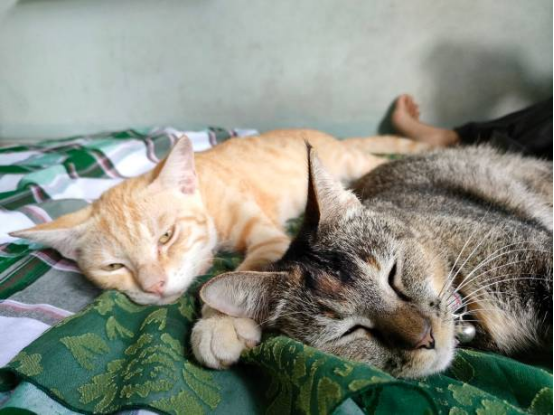
Setting up a cat bed next to a heater: Practical steps
Below is a four-stage guide, from pre-decoration preparation to daily maintenance, to ensure your cat is safe and warm.
Step 1: Preparation Phase
protection, andUnderstand the heater model and its safety features (automatic power-off, tip-over protection, overheat protection). For modern heaters, it is recommended to choose models with certification marks.
- Choosing the right cat bed: heat-resistant bottom, appropriate size, and non-slip foot pads.
- Clean around the heater: Remove blankets, papers, and other debris, and ensure the floor is level.
Step 2: Placement
heater andThe bed should be at least 60–90 cm away from the heater, and can be placed in a corner or next to furniture to avoid direct exposure to strong hot air.
If the warm air is concentrated, you can move slightly to the side so that the cat is still warm but not directly exposed to the airflow.
Place a light mat, blanket, or your cat’s favorite toy there to increase their sense of security. Cats will usually choose this spot naturally.
Step 3: Use monitoring and adjustment
hot.”Initial observation of the cat’s behavior: Does it remain still for a long time, have a hot tail, or jump and then suddenly move away? This may mean it’s “too hot”.
Don’t leave your cat unattended for too long during rest periods. Even with safety devices, supervise your cat’s interaction with the heater.
If the cat always occupies the closest position, you can place an insulating mat or move it slightly back to ensure a safe buffer.
Step 4: Routine Maintenance
the cat bed regularly, removing the pad and cleaning the dust from the bottom.
Check that the heater’s cables and plugs are secure. Many accidents are caused by tipping over or problems with the wiring.
In winter, the air is dry, and cats are prone to dehydration or dry skin. You can use a humidifier or provide warm water.
When no one is present or when sleeping, please turn off the heater or move the cat bed to a safer location.
Frequently Asked Questions (Q&A)
Q: My cat likes to stay close to warm sources. Should I let it get even closer?
A: Cats instinctively like warmth, but getting too close can cause burns or discomfort from direct heat. Maintaining a safe distance will usually satisfy them.
Q: I only have an electric heater at home. Are there any special considerations when setting up a cat bed?
A: Electric heaters have high surface temperatures and concentrated heat. It’s recommended to add an insulating pad under the bed and place it on a stable, flat surface, avoiding soft materials, to prevent the bed from overheating or warping.
Q: My cat likes to squeeze next to the bed at night; what should I do?
A: You can move the bed slightly outwards, allowing the cat to remain near a warm source but safely. At night, you can provide a cat bed or blanket, letting it freely choose its sleeping spot.

In conclusion: Warmth and safety can be achieved simultaneously.
Winter is coming. Providing your cat with a cat bed that’s close to a warm source yet offers a safe buffer not only ensures its comfort but also shows your care. By following the steps of “Choose a cat bed → Placement → Monitor usage → Routine maintenance,” you can ensure your room is both warm and safe.
May your cat curl up in its warm bed on winter nights, feeling the gentle warmth, and drift off to sleep safely and sweetly. Safety and warmth can go hand in hand.